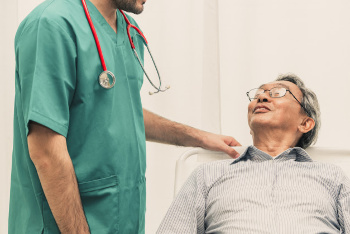
When you’re finished with cancer treatment, you might feel relieved and excited to start a new chapter in your life. It can be a hopeful time.
However, treatment itself can have side effects that last for years, in ways that you might not expect. For example, chemotherapy might have an effect on your memory or ability to communicate. Or you might feel fatigued much of the time, no matter how much you rest.
Fortunately, help is available for many of these issues through cancer rehabilitation. The goal of cancer rehab is to help you adjust to life after cancer and rebuild skills that might be impaired by treatment.
Cancer rehabilitation can apply to sexual health, too. Let’s look at some examples.
Erectile Dysfunction
Some men develop erectile dysfunction (ED) after cancer treatment. ED is particularly common in men who have had a radical prostatectomy (surgical removal of the prostate gland) to treat prostate cancer. Penile rehabilitation aims to restore erectile function. Medications - such as pills, injections, and suppositories – are used to induce erections so that the penis can “practice” becoming erect on its own again.
Vaginal Stenosis and Dryness
Treatment for gynecological cancers and colorectal cancer, including surgery and radiation, can make the vagina shorter, narrower, and dry. A specialist can teach women how to use vaginal dilators. Dilators are plastic tubes that usually come in a set, gradually increasing in size one by one. During therapy, dilators are placed inside the vagina to widen it. Specialists can also advise on lubricants to make penetration more comfortable.
Sexual Pain and Incontinence
Pelvic floor muscles are sometimes compared to a “hammock” that keep your pelvic organs in place. Some cancer treatments, such as radiation and surgery, can weaken pelvic floor muscles, which may result in incontinence, painful sex, and erectile dysfunction. A physical therapist can help patients regain strength in the pelvic area to improve symptoms.
Emotional and Psychological Health
Coping with sexual issues after cancer treatment can take a toll on self-esteem. You might worry about your attractiveness after surgery, feel anxious about sexual pain, or struggle to communicate your needs to your partner.
Therapists trained to work with cancer survivors can help you and your partner adapt to any changes in your relationship. A counselor can also help you re-build your sexual self-confidence and suggest adjustments and strategies to improve your sexual satisfaction.
Other Aspects
Sometimes, cancer treatment affects body parts and functions that you might not immediately associate with sex. Here are some examples:
- Speech. Radiation used to treat head and neck cancers can affect a person’s ability to speak. Speech therapy helps restore this function, making it easier to talk to a partner or continue a conversation on a first date.
- Fatigue. Cancer treatment can be exhausting, and it can be difficult to muster up the energy for sex and relationships. Specialists can help patients recover their energy levels through exercise and education.
- Peripheral neuropathy. Chemotherapy often leads to peripheral neuropathy – nerve damage in areas like the hands, feet, and genitals. When this happens, it becomes more difficult for the brain to send the messages that trigger sexual arousal. Occupational and physical therapy may not address sexuality directly, but recovering nerve function could help with sex.
- Balance and walking. Physical therapy and exercise programs help patients regain their balance and avoid falls, allowing them to enjoy more activities with their partner, even if it’s just a simple walk through the park.
Which services are available to me?
To find out more about cancer rehabilitation for your personal situation, start by talking to your oncology team or healthcare provider. They can refer you to specialists who work with cancer survivors.
It’s also a good idea to talk to your health insurer. Coverage for cancer rehabilitation services can vary from carrier to carrier. Be specific about the services you need and be sure to understand the details of your coverage. Don’t hesitate to ask questions if you don’t understand.
Resources
CancerNetwork.com
Smith, Lori, BSN, MSN, CRNP
“Radiation-Induced Vaginal Stenosis”
(July 20, 2012)
https://www.cancernetwork.com/oncology-nursing-gynecologic-cancers/radiation-induced-vaginal-stenosis
Conquer-Magazine.com
Howe, Nancy Litterman, MS, CES
“Is Cancer Rehabilitation a Good Option for You? It’s Never Too Late to Ask for a Referral”
(October 2019)
https://conquer-magazine.com/issues/2019/vol-5-no-5-october-2019/1052-is-cancer-rehabilitation-a-good-option-for-you-it-s-never-too-late-to-ask-for-a-referral
International Society for Sexual Medicine
“What does a penile rehabilitation program (PRP) involve?”
https://www.issm.info/sexual-health-qa/what-does-a-penile-rehabilitation-program-prp-involve/
“What is a penile rehabilitation program (PRP)?”
https://www.issm.info/sexual-health-qa/what-is-a-penile-rehabilitation-program-prp/
SexHealthMatters.org
“How Might Cancer Treatment Affect Sexual Function”
https://www.sexhealthmatters.org/sex-after-cancer/how-might-cancer-treatment-affect-sexual-function
“Neuropathy a Common Cause of ED”
(July 29, 2015)
https://www.sexhealthmatters.org/sex-health-blog/neuropathy-a-common-cause-of-ed
West Virginia University Health Sciences
Phillips, Kristin A., PT/DPT, WCS, CLT-LANA
“Pelvic Floor Physical Therapy and The Oncology Population: Managing
Symptoms of The Disease and its Treatments”
https://www.hsc.wvu.edu/media/13424/9-pelvic-floor-physical-therapy.pdf
You may also be interested in...
Other Popular Articles
What Is the Average Penis Size?
If you have ever wondered how your penis compares to others in terms of size, you are not alone. Many men are curious to know how their penises stack up compared to the average. Unfortunately, general curiosity can sometimes give way to full-on obsession and anxiety about penis size. This can be an unhealthy and often unnecessary fixation, especially because most men who think their penises are too small have perfectly normal-sized penises.
Can Sex Reduce Menstrual Cramps?
The SMSNA periodically receives and publishes ‘guest editorials.’ The current article was submitted by Mia Barnes, a freelance writer and researcher who specializes in women's health, wellness, and healthy living. She is the Founder and Editor-in-Chief of Body+Mind Magazine.
Having sex while you experience menstrual cramps is healthy and can provide significant benefits. While it might not be the first activity that comes to mind when your PMS or period cramping begins, many people enjoy sex to reduce menstrual cramps, experience increased pleasure and benefit from other advantages. Learn more about having sex while menstrual cramps are happening and how it can help your body.

What Is Sensate Focus and How Does It Work?
Sensate focus is a technique used to improve intimacy and communication between partners around sex, reduce sexual performance anxiety, and shift away from ingrained, goal-oriented sexual patterns that may not be serving a couple.

What Is Jelqing, and Does It Actually Work?
The term “jelqing” refers to a set of penis stretching exercises that some believe can make the penis bigger. Although the practice has gained attention and popularity in blogs and internet forums in recent years, there is no scientific evidence that it is an effective way to permanently increase the size of one’s penis. In fact, in some cases, jelqing may actually cause damage to the penis, so it is a good idea to get all the facts before setting off to try it.

How Long Does It Take the Average Man to Ejaculate?
On average, it takes a man between 5 to 7 minutes to orgasm and ejaculate during sexual intercourse.
Can Sex Throw off Your Vaginal pH Balance?
The SMSNA periodically receives and publishes ‘guest editorials.’ The current article was submitted by Mia Barnes, a freelance writer and researcher who specializes in women's health, wellness, and healthy living. She is the Founder and Editor-in-Chief of Body+Mind Magazine.
Your vagina is a pretty powerful organ. It is a pathway for menstrual blood and babies. It also is a main player in sexual intercourse. You might hear about your vagina’s pH and worry that yours is at risk. Here’s what to know about vaginal pH, including the impacts sex could have.
Attention: Restrictions on use of SMSNA content in third party applications, including artificial intelligence technologies, such as large language models and generative AI.
You are prohibited from using or uploading content you accessed through this website into external applications, bots, software, or websites, including those using artificial intelligence technologies and infrastructure, including deep learning, machine learning and large language models and generative AI.