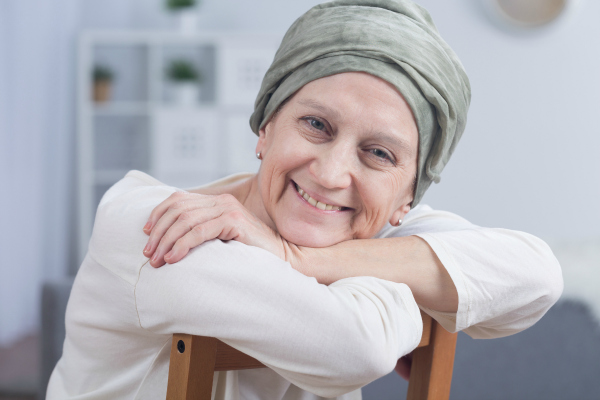
In August 2017, the European Journal of Cancer Care published a comprehensive review by Canadian researchers that involved over 100 medical studies concerning women, cancer, and sexual health. The authors delved into the physical and psychological aspects of cancer that can affect sexuality. They also discussed some of the ways patients and their healthcare team might approach sexual problems during and after cancer treatment.
Their review included studies on a variety of different cancers, including gynecological cancers (such as ovarian or cervical cancer), breast cancer, and cancers affecting the gastrointestinal organs, blood, head, and neck. Patients who participated in the studies came from around the world.
Today, we’d like to share some of the findings from their review.
Physical Aspects
Some women start having cancer-related sexual problems even before their diagnosis. For example, women with gynecological cancers might have abdominal pain, heavy periods, or bleeding after sex.
For others, sexual issues are a result of treatments. Here are some examples:
Surgery
- Sometimes, genital nerves or blood vessels are damaged during surgery, which might reduce sensation or make it difficult for blood to travel to the area when a woman is aroused.
- If a woman has her ovaries removed (oophorectomy), her body produces less estrogen, an essential hormone for vaginal health. This can leave the vagina brittle and dry.
- Women who undergo mastectomy may feel self-conscious about the loss of one or both breasts and surgical scars.
Hormone Therapy
- Medications that interfere with estrogen production can cause vaginal changes, leading to dryness and loss of elasticity.
- Hormonal therapy might also lessen sexual desire.
Chemotherapy
- Chemotherapy often triggers early menopause, and estrogen levels decline.
- Fatigue and gastrointestinal problems from chemotherapy may leave women too tired or ill for sex.
- Hair loss and weight gain associated with chemotherapy can affect a woman’s body image.
Hematopoietic Stem Cell Transplantation (HSCT)
- Women who undergo this treatment might develop graft-versus-host disease (GVHD). In the genitals, GVHD may lead to vaginal dryness, narrowing, scarring, and pain.
Radiation Therapy
- Radiation has been linked to fatigue, vaginal shortening, incontinence, loss of sensation in the genitals, and scarring.
Emotional Aspects
The physical side effects of cancer and treatment are intertwined with emotional ones, which can be just as distressing.
- Poor body image. As mentioned above, hair loss, weight gain, scarring, and other bodily changes make many women feel less feminine or less attractive to a partner.
- Shame and embarrassment. Women may not want a partner to see their changed bodies. Episodes of incontinence can bring about anxiety.
- Guilt. Some women worry that they cannot please their partner sexually.
- Grief. It is not uncommon for women to grieve the loss of the sexual relationship they once had with their partner.
- Anxiety. Women may be concerned that their partner will end their relationship or go elsewhere for sexual satisfaction.
- Avoidance. Some women avoid sexual relationships altogether, particularly single women who fear rejection from partners after disclosing their cancer diagnosis.
Hope
All of these effects may sound overwhelming. The good news is that there is hope. The study authors listed a number of therapies that can help with the sexual repercussions of cancer and treatment:
- Counseling. Therapists can help women cope with the anxiety and depression often associated with a cancer diagnosis. They can help couples strengthen their relationship through better communication. And sex therapists can offer guidance on adjustments to make in the bedroom that can improve intimacy for both partners.
- Yoga and mindfulness. Practicing yoga and mindfulness activities may lower stress, encourage relaxation, and induce a feeling of centeredness.
- Vaginal moisturizers and lubricants. These over-the-counter products can relieve vaginal discomfort and dryness, making intercourse more comfortable.
- Vaginal estrogen-based treatments. As noted above, estrogen is essential for vaginal health. Estrogen therapy is not appropriate for all women with cancer, but for some, it can minimize the vaginal effects of medical menopause if applied locally.
- Vaginal dilators. In cases where the vagina shortens or narrows, dilators can help preserve the vagina’s original shape.
- Pelvic floor physical therapy. The pelvic floor muscles act as a “hammock” that keep the pelvic organs stable. Strengthening these muscles through physical therapy can reduce the likelihood of incontinence.
Keep in mind that women experience sexuality in different ways. The degree to which cancer and its treatment affects a woman’s sex life depends on the woman herself, her outlook, her relationships, her support network, and her oncology team. But overall, there is hope. Women with cancer should know that they can still enjoy intimacy.
Resources
European Journal of Cancer Care
Sears, Carly S., et al.
“A comprehensive review of sexual health concerns after cancer treatment and the biopsychosocial treatment options available to female patients”
(Full-text. Published online: August 10, 2017)
http://onlinelibrary.wiley.com/wol1/doi/10.1111/ecc.12738/full
You may also be interested in...
Other Popular Articles

What Is the Average Penis Size?
If you have ever wondered how your penis compares to others in terms of size, you are not alone. Many men are curious to know how their penises stack up compared to the average. Unfortunately, general curiosity can sometimes give way to full-on obsession and anxiety about penis size. This can be an unhealthy and often unnecessary fixation, especially because most men who think their penises are too small have perfectly normal-sized penises.
Can Sex Reduce Menstrual Cramps?
The SMSNA periodically receives and publishes ‘guest editorials.’ The current article was submitted by Mia Barnes, a freelance writer and researcher who specializes in women's health, wellness, and healthy living. She is the Founder and Editor-in-Chief of Body+Mind Magazine.
Having sex while you experience menstrual cramps is healthy and can provide significant benefits. While it might not be the first activity that comes to mind when your PMS or period cramping begins, many people enjoy sex to reduce menstrual cramps, experience increased pleasure and benefit from other advantages. Learn more about having sex while menstrual cramps are happening and how it can help your body.

What Is Sensate Focus and How Does It Work?
Sensate focus is a technique used to improve intimacy and communication between partners around sex, reduce sexual performance anxiety, and shift away from ingrained, goal-oriented sexual patterns that may not be serving a couple.

What Is Jelqing, and Does It Actually Work?
The term “jelqing” refers to a set of penis stretching exercises that some believe can make the penis bigger. Although the practice has gained attention and popularity in blogs and internet forums in recent years, there is no scientific evidence that it is an effective way to permanently increase the size of one’s penis. In fact, in some cases, jelqing may actually cause damage to the penis, so it is a good idea to get all the facts before setting off to try it.

How Long Does It Take the Average Man to Ejaculate?
On average, it takes a man between 5 to 7 minutes to orgasm and ejaculate during sexual intercourse.
Can Sex Throw off Your Vaginal pH Balance?
The SMSNA periodically receives and publishes ‘guest editorials.’ The current article was submitted by Mia Barnes, a freelance writer and researcher who specializes in women's health, wellness, and healthy living. She is the Founder and Editor-in-Chief of Body+Mind Magazine.
Your vagina is a pretty powerful organ. It is a pathway for menstrual blood and babies. It also is a main player in sexual intercourse. You might hear about your vagina’s pH and worry that yours is at risk. Here’s what to know about vaginal pH, including the impacts sex could have.
Attention: Restrictions on use of SMSNA content in third party applications, including artificial intelligence technologies, such as large language models and generative AI.
You are prohibited from using or uploading content you accessed through this website into external applications, bots, software, or websites, including those using artificial intelligence technologies and infrastructure, including deep learning, machine learning and large language models and generative AI.