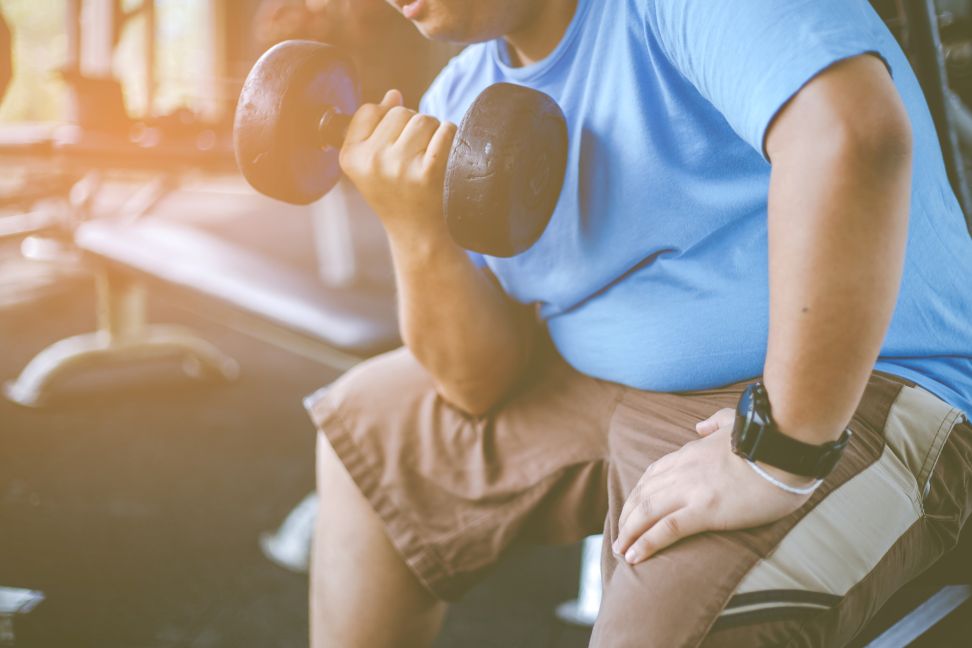
Testosterone deficiency (hypogonadism) is common in older men and men with obesity. Weight gain and obesity affect testosterone levels, and testosterone levels affect weight gain and obesity. This is often seen as a “vicious cycle,” and low testosterone may contribute to weight gain by:
- Reducing lean (fat-free) mass. Less lean mass can slow metabolism.
- Increasing belly fat. Hormonal imbalances can cause fat to distribute around the abdomen.
- Lowering energy levels. This can make physical activity feel more difficult.
- Changing insulin sensitivity and increasing hunger hormones. This may lead to insulin-related fat storage and excess hunger.
Weight gain may contribute to testosterone deficiency by:
- Lowering sex hormone-binding globulin (SHBG), which carries testosterone through the bloodstream. Lower SHBG means lower amounts of testosterone in the bloodstream.
- Suppressing the brain pathway that controls testosterone production.
- Converting testosterone to estradiol through the aromatase enzyme. Aromatase lives in fat cells, so increased fat cells can lead to low testosterone and higher estrogen levels.
Weight loss may help testosterone regulation in men. However, losing weight through diet and exercise may also reduce lean mass. While fat is most of the weight lost, at least a quarter of the weight loss may be lean mass. Not to worry, some loss of lean mass is expected during weight loss. Regular protein intake and resistance exercise can help preserve muscle. This would lead to more fat loss than lean mass loss.
TRT Helps Maintain Weight Loss and Lean Mass
Testosterone replacement therapy (TRT) is typically prescribed to testosterone-deficient men. TRT can bring men's testosterone levels closer to normal and help with symptoms. For testosterone-deficient men who are also trying to lose weight, TRT could complement lifestyle changes such as diet and exercise.
Some studies have found that TRT may support weight loss efforts. With diet changes, men may lose weight and reduce their BMI and abdominal circumference. However, weight loss may also include the loss of lean mass. After returning to their regular diet, men not on TRT may lose lean mass, while men on TRT may continue to lose weight and regain lean mass.
Patients Taking GLP-1s May Benefit from Concurrent TRT
Men with obesity may also have testosterone deficiency. Depending on other factors, some may be candidates for both glucagon-like peptide-1 (GLP-1) receptor agonists and TRT. GLP-1s can cause rapid weight loss by:
- Suppressing the “food noise” that hunger hormones contribute to.
- Slowing digestion so the stomach feels fuller for longer.
- Controlling insulin release to reduce spikes and crashes.
Because of how rapidly weight can be lost on GLP-1s, men may lose a large portion of lean mass as well. Lean mass is important because it helps burn calories (metabolism) and maintain bone and joint strength. Through these results, heart health, physical function, and overall quality of life may also improve.
While taking GLP-1s, it is important to keep up with strength training and protein intake. Regardless of testosterone levels, this practice can help preserve muscle with drastic weight loss. For men with testosterone deficiency, adding TRT may help maintain lean mass and manage metabolic issues. However, there is not enough research on the subject to confirm that this is true.
Key Takeaways
- TRT is not a weight loss method. Men who are both testosterone-deficient and obese may benefit from TRT alongside traditional weight-loss efforts.
- Testosterone and obesity have a “vicious cycle” relationship. Low testosterone may contribute to weight gain, and obesity may contribute to low testosterone.
- TRT combined with weight-loss efforts may help maintain lean mass. This could improve quality of life and some physical symptoms of testosterone deficiency.
- If weight gain or low testosterone is affecting your quality of life, it may help to speak with a sexual healthcare provider.
Resources
Canal de Velasco, L., González Flores, J. E., Kraus Fischer, G., Morales Arteaga, J. L., Olivares Casas, M., Álvarez Nava, K. N., & Morales Morales, F. M. (2026). Testosterone replacement therapy as a potential strategy to preserve lean mass in men with persistently low serum testosterone receiving GLP-1 receptor agonists: A narrative review. Cureus, 18(3). https://doi.org/10.7759/cureus.105734
Ng Tang Fui, M., Prendergast, L. A., Dupuis, P., Raval, M., Strauss, B. J., Zajac, J. D., & Grossmann, M. (2016). Effects of testosterone treatment on body fat and lean mass in obese men on a hypocaloric diet: A randomised controlled trial. BMC Medicine, 14(1). https://doi.org/10.1186/s12916-016-0700-9
Traish, A. M. (2014). Testosterone and weight loss. Current Opinion in Endocrinology, Diabetes & Obesity, 21(5), 313–322. https://doi.org/10.1097/med.0000000000000086You may also be interested in...
SMSNA Patients
Factors That Affect Bone Health in Aging Men
September 15, 2026Blog
Hormone Therapy: Testosterone and Its Use in Sexual Health
June 16, 2026Did You Know?
What Effects do GLP-1 Agonists Have on Sexual Health?
March 24, 2026Blog
Can Your Metabolic Health Affect Your Sexual Desire and Function? 7 Things to Know
January 29, 2026Did You Know?
Is There Such a Thing as “Normal” Ejaculation?
October 7, 2025Blog
Everything You Need to Know About Varicoceles
May 20, 2025SMSNA
Guidelines for TRT in Prostate Cancer Patients
August 5, 2025Other Popular Articles
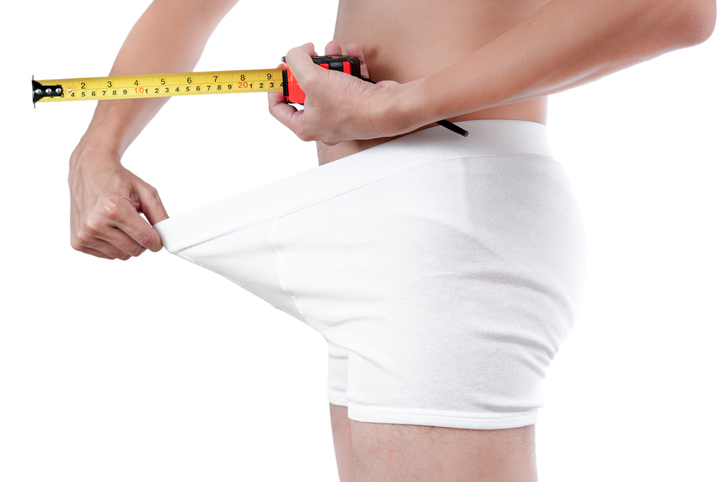
What Is the Average Penis Size?
If you have ever wondered how your penis compares to others in terms of size, you are not alone. Many men are curious to know how their penises stack up compared to the average. Unfortunately, general curiosity can sometimes give way to full-on obsession and anxiety about penis size. This can be an unhealthy and often unnecessary fixation, especially because most men who think their penises are too small have perfectly normal-sized penises.

Can Sex Reduce Menstrual Cramps?
The SMSNA periodically receives and publishes ‘guest editorials.’ The current article was submitted by Mia Barnes, a freelance writer and researcher who specializes in women's health, wellness, and healthy living. She is the Founder and Editor-in-Chief of Body+Mind Magazine.
Having sex while you experience menstrual cramps is healthy and can provide significant benefits. While it might not be the first activity that comes to mind when your PMS or period cramping begins, many people enjoy sex to reduce menstrual cramps, experience increased pleasure and benefit from other advantages. Learn more about having sex while menstrual cramps are happening and how it can help your body.

What Is Sensate Focus and How Does It Work?
Sensate focus is a technique used to improve intimacy and communication between partners around sex, reduce sexual performance anxiety, and shift away from ingrained, goal-oriented sexual patterns that may not be serving a couple.
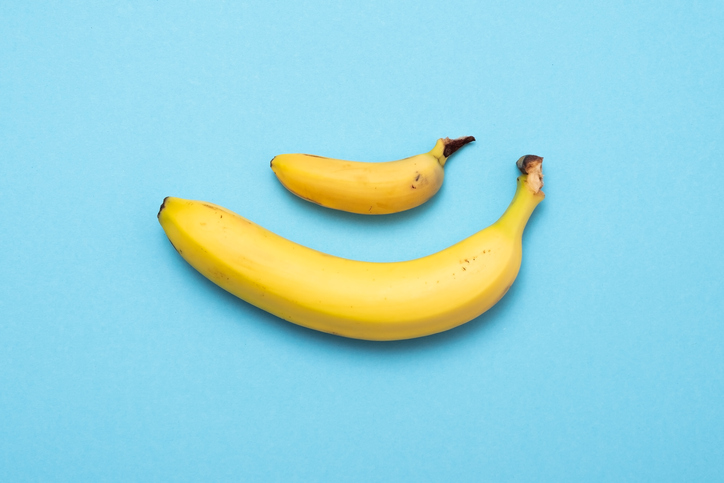
What Is Jelqing, and Does It Actually Work?
The term “jelqing” refers to a set of penis stretching exercises that some believe can make the penis bigger. Although the practice has gained attention and popularity in blogs and internet forums in recent years, there is no scientific evidence that it is an effective way to permanently increase the size of one’s penis. In fact, in some cases, jelqing may actually cause damage to the penis, so it is a good idea to get all the facts before setting off to try it.

How Long Does It Take the Average Man to Ejaculate?
On average, it takes a man between 5 to 7 minutes to orgasm and ejaculate during sexual intercourse.
Can Sex Throw off Your Vaginal pH Balance?
The SMSNA periodically receives and publishes ‘guest editorials.’ The current article was submitted by Mia Barnes, a freelance writer and researcher who specializes in women's health, wellness, and healthy living. She is the Founder and Editor-in-Chief of Body+Mind Magazine.
Your vagina is a pretty powerful organ. It is a pathway for menstrual blood and babies. It also is a main player in sexual intercourse. You might hear about your vagina’s pH and worry that yours is at risk. Here’s what to know about vaginal pH, including the impacts sex could have.
Attention: Restrictions on use of SMSNA content in third party applications, including artificial intelligence technologies, such as large language models and generative AI.
You are prohibited from using or uploading content you accessed through this website into external applications, bots, software, or websites, including those using artificial intelligence technologies and infrastructure, including deep learning, machine learning and large language models and generative AI.