Adding 5 Months of Maintenance Shockwave Therapy May Prolong Its Effects
Erectile dysfunction (ED) is common, occurring in roughly 24.2% of the global population, and around 52.2% in men older than 75 years. First-line treatment for ED often includes oral medications: phosphodiesterase type 5 inhibitors (PDE5is) such as Viagra and Cialis.
Also accepted as treatments by the American Urological Association (AUA) and the Sexual Medicine Society of North America (SMSNA) include non-medication options such as:
- Vacuum erection devices,
- Intracavernosal injections,
- Penile prosthesis implantation,
- Low-intensity extracorporeal shock wave therapy (Li-ESWT), as an investigational treatment.
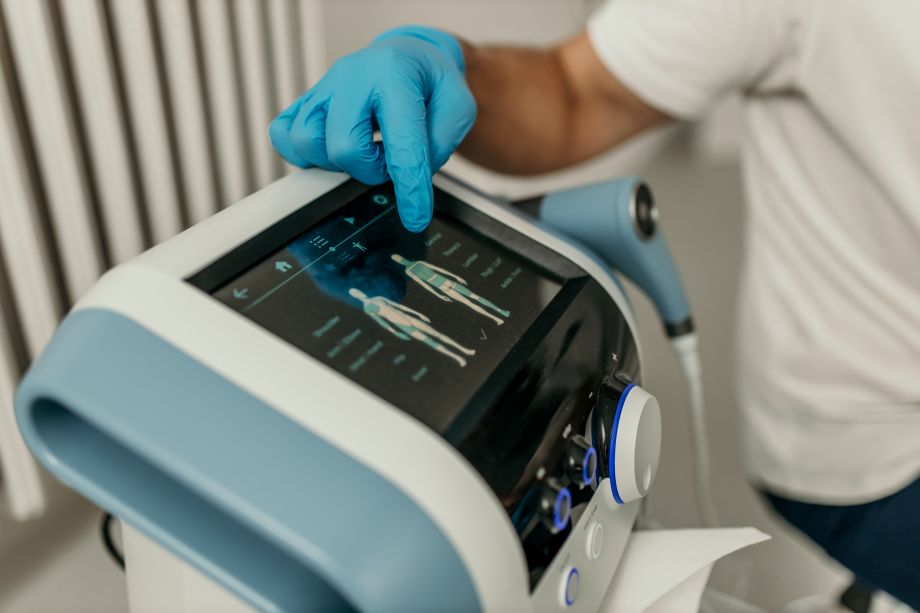
Li-ESWT involves sending low-intensity sound waves through the penis to promote tissue repair, reduce inflammation, and help with blood flow and blood vessel formation. Usually, this treatment type happens over 3-6 weeks, with 6 sessions. However, some research notes that the positive effects of this treatment do tend to go away over time.
A recent study investigated how effective an additional course of Li-ESWT might be in keeping up with the positive effects of treatment. One group of 81 men received only 6 weeks of treatment and follow-up at 12 and 24 weeks. This was the control group. The other “maintenance” group included 70 men and received an additional 5 months of treatment, with one Li-ESWT session per month.
Benefits Are Minimal but Not Ignorable
Researchers measured the patients’ results with:
- The International Index of Erectile Function-Erectile Function (IIEF-EF) scale, where lower scores indicate worse ED. Here, there was no difference between the maintenance and control groups.
- The Erection Hardness Scale (EHS), where lower scores mean less hardness during erection;
- Minimal clinically important difference (MCID), which is the smallest change in outcome that patients find beneficial;
- Self-esteem, which improved in both groups but showed no drastic difference in improvement between the maintenance and control groups.
- And complications from Li-ESWT, of which there were none.
Despite having no difference in IIEF-EF scores, researchers did find that the maintenance group had a higher rate of MCID (perceived patient benefit) than the control group. This was consistent regardless of how severe the patient’s ED was.
The researchers believe this may be due to more tissue exposure to Li-ESWT, promoting healthier blood flow in the penis. With the ordinary 6-week protocol, this would decrease after a month. But, because the maintenance group was repeatedly exposed every month, this helped maintain the effects.
The EHS increased by at least one point in more of the maintenance group members by the end of the 24-week follow-up period. Researchers believe that this, combined with the information about MCID, shows that the extra five months of treatment can further improve ED in some patients.
Researchers note that those in the maintenance group with diabetes did not have as positive a change as their counterparts. This may mean that Li-ESWT is not as effective in ED patients with diabetes.
Key Takeaways
- Li-ESWT is being studied as a treatment for organic ED, but is still considered investigational in the U.S.
- Li-ESWT can be effective in treating ED on its own, but adding 5 more rounds after the initial 6-week treatment regimen may be more effective in treating ED.
- Even if the change was minimal, patients felt more improvement after the maintenance treatment than those who did not receive it.
- Despite lower patient adherence than expected, researchers believe this 5-month schedule is beneficial to maintaining the blood flow and tissue growth in the penis.
- More research is needed to see if these results are accurate and translate globally.
- It may be helpful to speak with a sexual health provider if ED is distressing and not psychological, to see what options are available.
Resources
Burnett, A. L., Nehra, A., Breau, R. H., Culkin, D. J., Faraday, M. M., Hakim, L. S., Heidelbaugh, J., Khera, M., McVary, K. T., Miner, M. M., Nelson, C. J., Sadeghi-Nejad, H., Seftel, A. D., & Shindel, A. W. (2018). Erectile dysfunction: AUA Guideline. Journal of Urology, 200(3), 633–641. https://doi.org/10.1016/j.juro.2018.05.004
Sandoval-Salinas, C., Martinez, J. M., Corredor, H. A., Barba, J., & Patrón, F. (2026). Effectiveness of monthly maintenance low-intensity shockwave therapy added to a weekly protocol for erectile dysfunction: Multicenter open-label Randomized Study. The Journal of Sexual Medicine, 23(4). https://doi.org/10.1093/jsxmed/qdag076
You may also be interested in...
Did You Know?
What Women Need to Know About Pain During Sex
November 15, 2022Did You Know?
How Did STI Rates Change During the First Year of the COVID-19 Pandemic?
August 2, 2022SMSNA
Disorders of Ejaculation Guideline Highlights for APPs
June 9, 2022Did You Know?
The Facts About Vaginal Health and Feminine Hygiene
January 11, 2022SMSNA Patients
New Survey Reveals Men Prefer Telemedicine
October 19, 2021SMSNA
Online Treatments for Male Sexual Dysfunction in the Time of COVID-19
October 22, 2021Did You Know?
Why Does Sex Hurt?: A Guide for Figuring Out What Might Be Causing Painful Sex
June 22, 2021SMSNA Patients
Low-Intensity Shockwave Therapy May Be Beneficial for Women With Provoked Vestibulodynia
February 23, 2021Blog
An Overview of Concealed Penis
February 16, 2021Other Popular Articles
What Is the Average Penis Size?
If you have ever wondered how your penis compares to others in terms of size, you are not alone. Many men are curious to know how their penises stack up compared to the average. Unfortunately, general curiosity can sometimes give way to full-on obsession and anxiety about penis size. This can be an unhealthy and often unnecessary fixation, especially because most men who think their penises are too small have perfectly normal-sized penises.

Can Sex Reduce Menstrual Cramps?
The SMSNA periodically receives and publishes ‘guest editorials.’ The current article was submitted by Mia Barnes, a freelance writer and researcher who specializes in women's health, wellness, and healthy living. She is the Founder and Editor-in-Chief of Body+Mind Magazine.
Having sex while you experience menstrual cramps is healthy and can provide significant benefits. While it might not be the first activity that comes to mind when your PMS or period cramping begins, many people enjoy sex to reduce menstrual cramps, experience increased pleasure and benefit from other advantages. Learn more about having sex while menstrual cramps are happening and how it can help your body.

What Is Sensate Focus and How Does It Work?
Sensate focus is a technique used to improve intimacy and communication between partners around sex, reduce sexual performance anxiety, and shift away from ingrained, goal-oriented sexual patterns that may not be serving a couple.

What Is Jelqing, and Does It Actually Work?
The term “jelqing” refers to a set of penis stretching exercises that some believe can make the penis bigger. Although the practice has gained attention and popularity in blogs and internet forums in recent years, there is no scientific evidence that it is an effective way to permanently increase the size of one’s penis. In fact, in some cases, jelqing may actually cause damage to the penis, so it is a good idea to get all the facts before setting off to try it.

How Long Does It Take the Average Man to Ejaculate?
On average, it takes a man between 5 to 7 minutes to orgasm and ejaculate during sexual intercourse.
Can Sex Throw off Your Vaginal pH Balance?
The SMSNA periodically receives and publishes ‘guest editorials.’ The current article was submitted by Mia Barnes, a freelance writer and researcher who specializes in women's health, wellness, and healthy living. She is the Founder and Editor-in-Chief of Body+Mind Magazine.
Your vagina is a pretty powerful organ. It is a pathway for menstrual blood and babies. It also is a main player in sexual intercourse. You might hear about your vagina’s pH and worry that yours is at risk. Here’s what to know about vaginal pH, including the impacts sex could have.
Attention: Restrictions on use of SMSNA content in third party applications, including artificial intelligence technologies, such as large language models and generative AI.
You are prohibited from using or uploading content you accessed through this website into external applications, bots, software, or websites, including those using artificial intelligence technologies and infrastructure, including deep learning, machine learning and large language models and generative AI.