Sexual dysfunction (SD) refers to problems with sexual desire, arousal, orgasm, or pain. These problems can affect quality of life, relationships, and emotional well-being. SD is estimated to affect nearly 45% of adults worldwide. However, the true number is likely higher because many people are uncomfortable discussing sexual concerns with their healthcare provider.
Several FDA-approved treatments are available for certain types of sexual dysfunction, including:
- PDE5 inhibitors (Viagra or Cialis) for erectile dysfunction
- Flibanserin (Addyi) for premenopausal women with hypoactive sexual desire disorder (HSDD).
- Hormone therapy (such as estrogen or testosterone) for individuals with hormone-related sexual dysfunction.
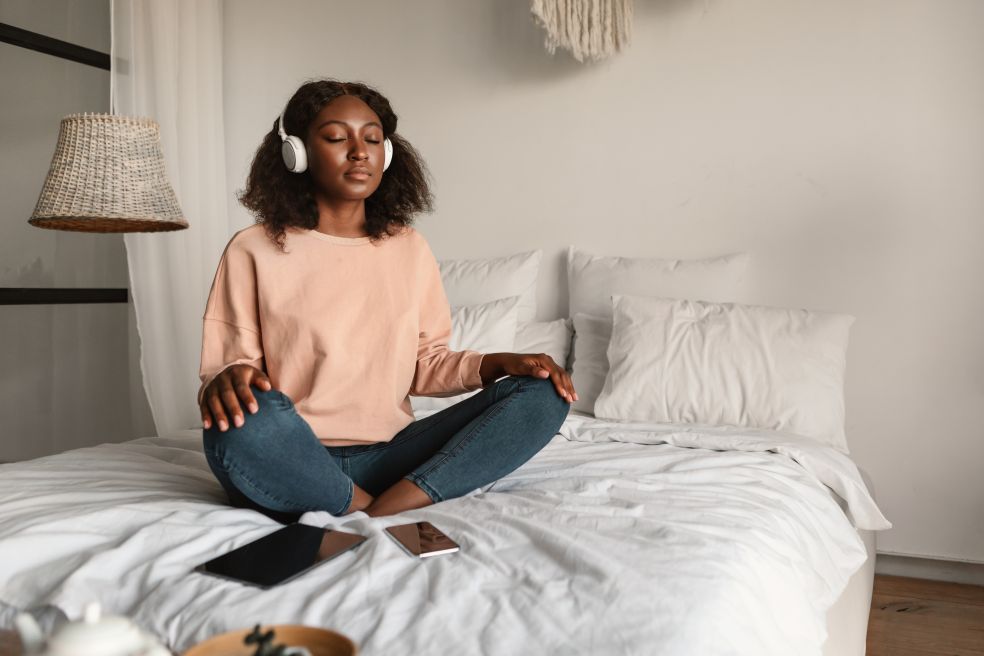
For many people, the most effective treatment involves medication in combination with counseling. Cognitive behavioral therapy (CBT) and mindfulness techniques can address the psychological, emotional, and relationship factors that often contribute to sexual dysfunction. These use a goal- and action-oriented approach that challenges the way one would normally manage situations.
Since the COVID-19 pandemic, several online options for CBT and mindfulness have become available. These include video visits, websites, smartphone applications, virtual reality, video games, and internet software. Researchers recently evaluated whether these online approaches can improve sexual function.
The review included 8 studies evaluating online CBT or mindfulness-based programs. Five studies involved cancer survivors. Of these, three focused on women with gynecologic cancers (including 516 women), and two focused on men treated for prostate cancer (182 men). The cancers in the female studies included breast, pelvic/vaginal, cervical, endometrial, and ovarian/fallopian. The remaining three studies included individuals without cancer.
The majority of patients were women, but there were a few studies that included sexual partners who were men (though not all partners were men). Additionally, only one study did not include a control group.
CBT and mindfulness interventions involved websites or online programs and included:
- CBT only
- CBT with education about one’s mental health (psychoeducation)
- Mindfulness only
- Support groups
- Support groups with psychoeducation
Only some studies involved patients communicating with a therapist. This happened either through online counselling sessions or via email.
All studies included pre- and post-assessments, and all but one included a follow-up assessment at a later time. These assessments focused on the following sexual response domains:
- Sexual desire
- Sexual arousal
- Lubrication
- Orgasm
- Sexual pain
- Sexual satisfaction
Overall, participants experienced improvements in one or more areas of sexual function. Improvements were seen with sexual desire, arousal, lubrication, orgasm, sexual pain, and sexual satisfaction. However, the degree of improvement varied across studies. While all focused on different aspects of sexual function, the results show a positive effect:
- Sexual desire generally improved, with studies reporting increases of up to 33% by the end of treatment.
- One study showed a decrease in desire at the follow-up, but the rest had consistently improved.
- Sexual arousal improved by between 0.72% and 37% across the studies.
- Lubrication improved by up to 30% in at least one of the studies.
- Orgasm improved by up to 26% in the studies that evaluated it.
- One study showed a slight decrease in orgasm scores at follow-up.
- Sexual pain levels decreased in three studies.
- The single study looking at vaginismus (vaginal pain) reported a 16% improvement.
- Sexual satisfaction improved by 3% - 43% across the studies.
Because most of the available research included cancer survivors, it is unclear whether these results apply equally to people with sexual dysfunction unrelated to cancer. Larger studies involving more diverse patient populations are still needed.
CBT has mostly been used to treat anxiety, depression, stress, and phobias - many of which affect sexual function, too. However, not much research specifically targets the effects of CBT on SD. While more research is needed, these findings suggest that online CBT and mindfulness programs may provide a convenient and effective treatment option for those with SD. Particularly when they are appropriately used alongside medical therapy.
Key Takeaways
- Human sexuality and SD are complex issues that impact a large number of adults.
- Outside of oral medications and hormones, clinicians may recommend CBT or mindfulness therapies for SD.
- Online CBT and mindfulness options have mostly been looked at for treating mental health issues, but not necessarily for their potential role in treating SD.
- Every study showed at least partial improvement in patients’ sexual function.
- Similar to related mental health conditions, online tools may be effective at treating SD.
- If SD is distressing or negatively impacting your well-being, it may help to speak with a sexual health provider.
Resources
Ghannam Ferreira, B., Lerner, T., Fuster Barbosa, G., Aida Gay de Pereyra, E., Baracat, E. C., & Soares Jr, J. M. (2026). Online interventions for the treatment of sexual dysfunctions: Systematic review and meta-analysis. The Journal of Sexual Medicine, 23(6). https://doi.org/10.1093/jsxmed/qdag154
You may also be interested in...
Blog
What Are Some Guidelines for Prostate Cancer Survivors When It Comes to Sexual Health?
November 7, 2023Blog
What Is the Role of the Cervix in Sexual Response?
February 28, 2023Blog
Unmet Sexual Needs of Partners Following Prostatectomy
December 27, 2022Did You Know?
What Is Movember?
November 1, 2022SMSNA
Rethinking Testosterone Replacement Therapy in Men With Prostate Cancer
May 11, 2022SMSNA Patients
PSA and Total Testosterone Levels in Men With Prostate Cancer
April 26, 2022Did You Know?
How Prostate Cancer May Affect Sexual Health
October 12, 2021SMSNA Patients
Heteronormativity and Prostate Cancer in Gay and Bisexual Men
August 3, 2021Other Popular Articles
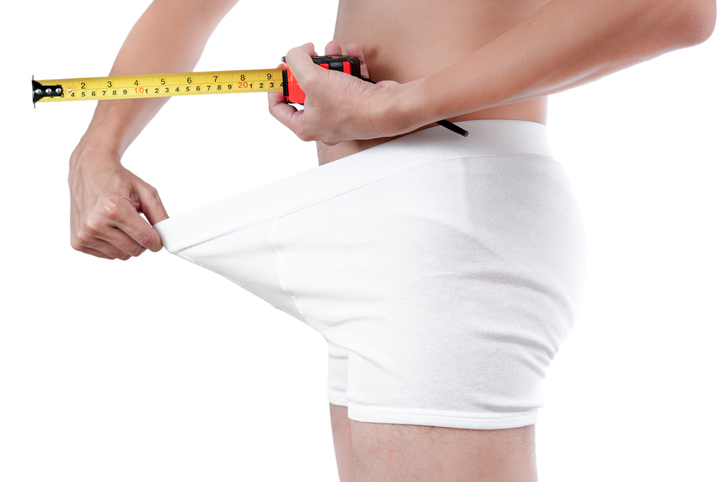
What Is the Average Penis Size?
If you have ever wondered how your penis compares to others in terms of size, you are not alone. Many men are curious to know how their penises stack up compared to the average. Unfortunately, general curiosity can sometimes give way to full-on obsession and anxiety about penis size. This can be an unhealthy and often unnecessary fixation, especially because most men who think their penises are too small have perfectly normal-sized penises.

Can Sex Reduce Menstrual Cramps?
The SMSNA periodically receives and publishes ‘guest editorials.’ The current article was submitted by Mia Barnes, a freelance writer and researcher who specializes in women's health, wellness, and healthy living. She is the Founder and Editor-in-Chief of Body+Mind Magazine.
Having sex while you experience menstrual cramps is healthy and can provide significant benefits. While it might not be the first activity that comes to mind when your PMS or period cramping begins, many people enjoy sex to reduce menstrual cramps, experience increased pleasure and benefit from other advantages. Learn more about having sex while menstrual cramps are happening and how it can help your body.
What Is Sensate Focus and How Does It Work?
Sensate focus is a technique used to improve intimacy and communication between partners around sex, reduce sexual performance anxiety, and shift away from ingrained, goal-oriented sexual patterns that may not be serving a couple.

What Is Jelqing, and Does It Actually Work?
The term “jelqing” refers to a set of penis stretching exercises that some believe can make the penis bigger. Although the practice has gained attention and popularity in blogs and internet forums in recent years, there is no scientific evidence that it is an effective way to permanently increase the size of one’s penis. In fact, in some cases, jelqing may actually cause damage to the penis, so it is a good idea to get all the facts before setting off to try it.

How Long Does It Take the Average Man to Ejaculate?
On average, it takes a man between 5 to 7 minutes to orgasm and ejaculate during sexual intercourse.
Can Sex Throw off Your Vaginal pH Balance?
The SMSNA periodically receives and publishes ‘guest editorials.’ The current article was submitted by Mia Barnes, a freelance writer and researcher who specializes in women's health, wellness, and healthy living. She is the Founder and Editor-in-Chief of Body+Mind Magazine.
Your vagina is a pretty powerful organ. It is a pathway for menstrual blood and babies. It also is a main player in sexual intercourse. You might hear about your vagina’s pH and worry that yours is at risk. Here’s what to know about vaginal pH, including the impacts sex could have.
Attention: Restrictions on use of SMSNA content in third party applications, including artificial intelligence technologies, such as large language models and generative AI.
You are prohibited from using or uploading content you accessed through this website into external applications, bots, software, or websites, including those using artificial intelligence technologies and infrastructure, including deep learning, machine learning and large language models and generative AI.