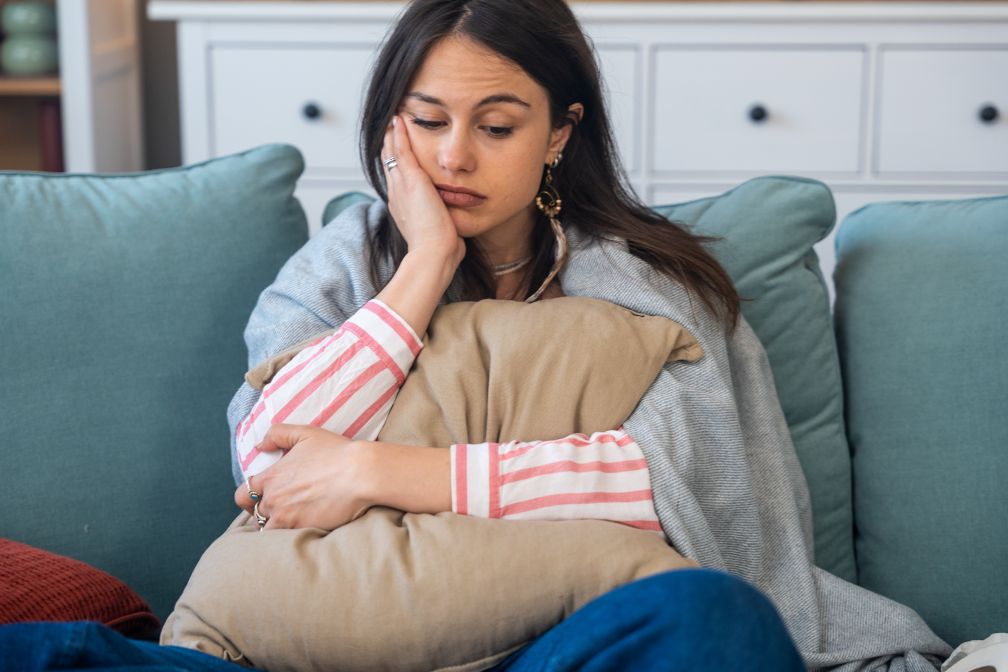
Endometriosis is a chronic, estrogen-dependent condition affecting around 10-20% of women at reproductive age. It occurs when endometrial tissue (uterine lining) implants itself outside the uterus. Typically, it implants itself in areas that would still be along the reproductive system, such as the fallopian tubes and ovaries, but sometimes this tissue may travel to the urethra, bowel and intestines, or further. Symptoms of endometriosis depend on the severity of excess tissue growth:
- Dyspareunia (pain with sex),
- Chronic pelvic pain,
- Pelvic floor muscle dysfunction,
- Pain while going to the bathroom,
- Irregular bowel behavior,
- Painful and heavy periods,
- Bloating,
Sometimes, even if there is a lot of buildup, symptoms may not present themselves. On the other hand, many women may have very light endometriosis and still present with intense symptoms.
Endometriosis remains under investigation. Many healthcare professionals don’t fully understand the facets of endometriosis, outside of symptomology and connection with genetic history (if your mom had endometriosis, you may have a higher chance of developing endometriosis). Often, endometriosis is not caught until after a long period of infertility, as that is one of its most commonly identified symptoms.
Impacts of Endometriosis
Quality of life and sexual function may also be affected by endometriosis. One study on quality of life in endometriosis patients reported 65% of their survey group was negatively affected in regard to their sex life, which may inversely affect their overall quality of life as well. Many women have reported feelings of inferiority, guilt toward their partner, shame, or loss of femininity, all of which may contribute toward mental health issues like depression or anxiety.
Another study focusing on endometriosis and sexual distress reported 68% of their survey group experienced severe sexual distress, with 67% avoiding sex altogether. This same study states that 8/10 women included in the study stated endometriosis symptoms like dyspareunia and pelvic pain negatively impacted their sex lives.
Are There Any Treatment Options?
Unfortunately, available treatment options are mainly meant to help manage pain from symptoms and to help with infertility, but cannot cure endometriosis:
- Non-steroidal anti-inflammatory medications, such as ibuprofen (brand name Advil), or acetaminophen (brand name Tylenol).
- Hormonal birth control, mainly progestin, to counteract the excess of estrogen and help with hormone regulation.
- In severe cases, healthcare providers may recommend laparoscopic surgery to remove the endometrial tissue.
- As a last resort, some providers may recommend a hysterectomy to avoid any further tissue growth or bodily harm.
Key Takeaways
- Endometriosis is not well understood but is known to be genetic.
- Endometriosis can cause debilitating periods, pelvic pain, and infertility.
- Many women may feel shame, guilt, or inferiority toward themselves and around their partners or relationships.
- Many women with endometriosis may avoid sex altogether because of endometriosis-induced sexual dysfunction.
If you or a loved one is struggling with the side effects of endometriosis, it is a good idea to meet with a health care professional to discuss treatment options that can improve one’s quality of life.
Resources
Amza, M., Sima, R.-M., Conea, I.-M., Bobei, T.-I., Augustin, F.-E., & Ples, L. (2025). The impact of endometriosis on patients’ quality of sexual life. Journal of Medicine and Life, 18(2), 90–93. https://doi.org/10.25122/jml-2024-0262
Jimenez, J. C., Romero, L. L., Garcia, I. B., Sanchez, M. L., & Fernandez, R. O. (2023). Endometriosis and dyspareunia: Solving the Enigma. European Journal of Obstetrics & Gynecology and Reproductive Biology: X, 19, 100224. https://doi.org/10.1016/j.eurox.2023.100224
Privitera, G., O’Brien, K., Misajon, R., & Lin, C.-Y. (2023). Endometriosis symptomatology, Dyspareunia, and sexual distress are related to avoidance of sex and negative impacts on the sex lives of women with endometriosis. International Journal of Environmental Research and Public Health, 20(4), 3362. https://doi.org/10.3390/ijerph20043362
Tsamantioti ES, Mahdy H. Endometriosis. [Updated 2023 Jan 23]. In: StatPearls [Internet]. Treasure Island (FL): StatPearls Publishing; 2025 Jan-. Available from: https://www.ncbi.nlm.nih.gov/books/NBK567777/
Vannuccini, S., Maseroli, E., Vignozzi, L., & Petraglia, F. (2023). The challenge of endometriosis for Female Sexual Health. The Journal of Sexual Medicine, 20(3), 240–246. https://doi.org/10.1093/jsxmed/qdad004
You may also be interested in...
Did You Know?
What is Toxic Shock Syndrome?
September 9, 2025Did You Know?
What is Adenomyosis?
August 5, 2025SMSNA Patients
Body Functionality Appreciation: What Is It and How Can It Help with Endometriosis?
March 25, 2025SMSNA Patients
Comparing Sexual Function and Mental Health in Women Using Different Contraceptive Methods
September 10, 2024Blog
How Can Pelvic Floor Exercises Improve Sexual Health in Both Men and Women?
October 8, 2024Did You Know?
Types of Birth Control and How They Work
February 27, 2024SMSNA Patients
Does the Menstrual Cycle Impact Sexual Desire?
July 25, 2023Blog
The Impact of Deep Endometriosis on Sexual Function Before and After Surgery
March 22, 2022Blog
A Versatile Sex Life May Increase Sexual Satisfaction for Women With Endometriosis
January 25, 2021Other Popular Articles
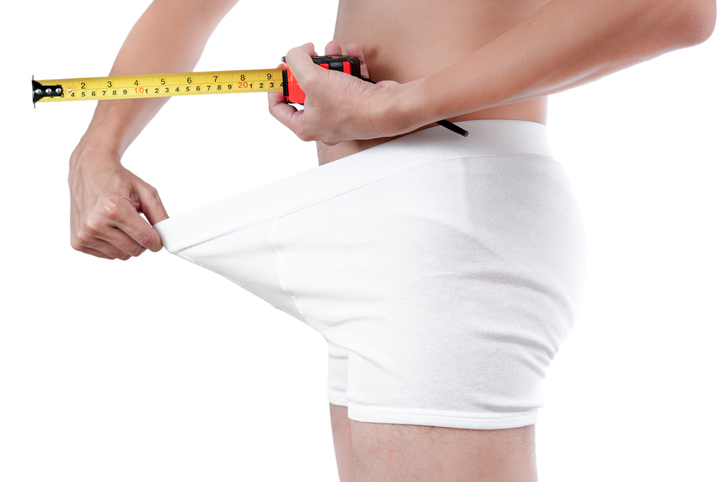
What Is the Average Penis Size?
If you have ever wondered how your penis compares to others in terms of size, you are not alone. Many men are curious to know how their penises stack up compared to the average. Unfortunately, general curiosity can sometimes give way to full-on obsession and anxiety about penis size. This can be an unhealthy and often unnecessary fixation, especially because most men who think their penises are too small have perfectly normal-sized penises.
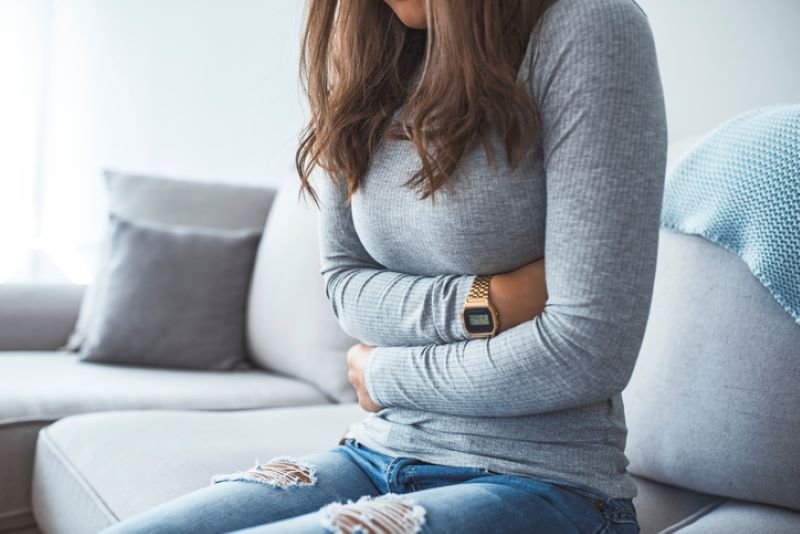
Can Sex Reduce Menstrual Cramps?
The SMSNA periodically receives and publishes ‘guest editorials.’ The current article was submitted by Mia Barnes, a freelance writer and researcher who specializes in women's health, wellness, and healthy living. She is the Founder and Editor-in-Chief of Body+Mind Magazine.
Having sex while you experience menstrual cramps is healthy and can provide significant benefits. While it might not be the first activity that comes to mind when your PMS or period cramping begins, many people enjoy sex to reduce menstrual cramps, experience increased pleasure and benefit from other advantages. Learn more about having sex while menstrual cramps are happening and how it can help your body.
What Is Sensate Focus and How Does It Work?
Sensate focus is a technique used to improve intimacy and communication between partners around sex, reduce sexual performance anxiety, and shift away from ingrained, goal-oriented sexual patterns that may not be serving a couple.
What Is Jelqing, and Does It Actually Work?
The term “jelqing” refers to a set of penis stretching exercises that some believe can make the penis bigger. Although the practice has gained attention and popularity in blogs and internet forums in recent years, there is no scientific evidence that it is an effective way to permanently increase the size of one’s penis. In fact, in some cases, jelqing may actually cause damage to the penis, so it is a good idea to get all the facts before setting off to try it.

How Long Does It Take the Average Man to Ejaculate?
On average, it takes a man between 5 to 7 minutes to orgasm and ejaculate during sexual intercourse.
Can Sex Throw off Your Vaginal pH Balance?
The SMSNA periodically receives and publishes ‘guest editorials.’ The current article was submitted by Mia Barnes, a freelance writer and researcher who specializes in women's health, wellness, and healthy living. She is the Founder and Editor-in-Chief of Body+Mind Magazine.
Your vagina is a pretty powerful organ. It is a pathway for menstrual blood and babies. It also is a main player in sexual intercourse. You might hear about your vagina’s pH and worry that yours is at risk. Here’s what to know about vaginal pH, including the impacts sex could have.
Attention: Restrictions on use of SMSNA content in third party applications, including artificial intelligence technologies, such as large language models and generative AI.
You are prohibited from using or uploading content you accessed through this website into external applications, bots, software, or websites, including those using artificial intelligence technologies and infrastructure, including deep learning, machine learning and large language models and generative AI.